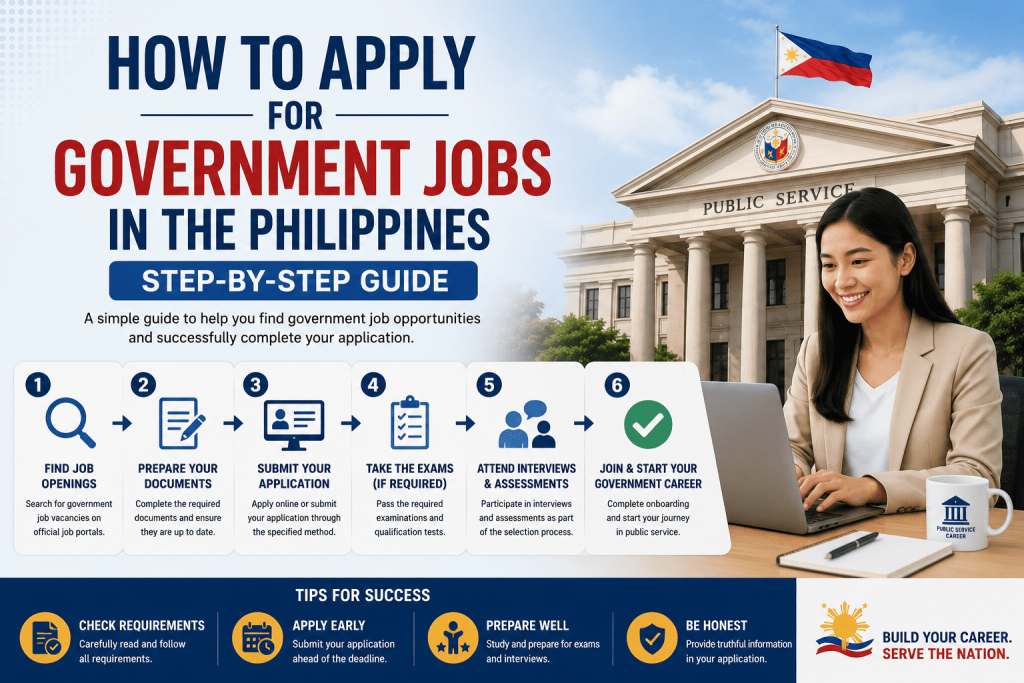
Learning how to apply for government jobs in the Philippines is highly sought after by many Filipinos due to competitive salaries, job security, and excellent benefits. However, navigating the state recruitment process can be challenging if you do not know where to start.
Civil Service Eligibility is the foundational golden ticket for anyone aspiring to build a permanent career within the Philippine government. Whether you are aiming for a local municipal hall item or a high-ranking position in a national agency, possessing the correct legal eligibility is non-negotiable.
This comprehensive guide breaks down the different types of civil service eligibilities, the baseline qualification standards, and the step-by-step process to secure yours in 2026.
What is Civil Service Eligibility?
Civil Service Eligibility is an official status granted by the Civil Service Commission (CSC) to individuals who successfully pass mandated examinations or satisfy specific legal criteria. It serves as a quality-assurance metric, proving that an applicant possesses the structural competence, ethics, and aptitude required for public sector work.
Why is it Crucial?
Under Civil Service laws, individuals without appropriate eligibility can only be appointed under temporary, contractual, casual, or Job Order (JO) statuses. These setups lack security of tenure, mandatory government bonuses, and standard retirement milestones.
The Power of Eligibility: Once you are conferred a permanent Civil Service eligibility, it is active for life and never expires.
Types of Civil Service Eligibility
While most Filipinos secure eligibility by taking the standard Career Service Examination (CSE), the CSC also recognizes alternative pathways based on professional licenses and academic merits.
1. Career Service Professional Eligibility
- How to get it: By passing the CSE-PPT Professional Level with a score of 80% or higher.
- Coverage: Qualifies you for both First-Level (clerical/support) and Second-Level (technical, administrative, professional, and supervisory) positions up to Salary Grade 24.
2. Career Service Subprofessional Eligibility
- How to get it: By passing the CSE-PPT Subprofessional Level with a score of 80% or higher.
- Coverage: Exclusively qualifies you for First-Level positions involving clerical, secretarial, trade, and custodial functions (generally restricted up to SG 10).
3. RA 1080 (Bar and Board Exam Eligibility)
- How to get it: Automatically granted to individuals who pass licensure exams conducted by the Professional Regulation Commission (PRC) or the Supreme Court (for lawyers).
- Advantage: If you are a Licensed Teacher, CPA, Nurse, or Engineer, you do not need to take the Civil Service Exam. Your PRC license stands as an automatic equivalent to Professional Eligibility for matching roles.
4. PD 907 (Honor Graduate Eligibility)
- How to get it: Automatically conferred to students who graduated Summa Cum Laude, Magna Cum Laude, or Cum Laude from recognized local universities or colleges.
- Advantage: Honor graduates can apply for direct exemption, gaining Professional Eligibility without taking the physical paper-and-pencil exam.
5. Special and Barangay Official Eligibilities
The CSC also extends specialized eligibilities under explicit conditions:
- Barangay Official Eligibility (BOE): For elective and appointive barangay officials who complete a specific structural tenure of service.
- K to 12 / Senior High School Completers: Under current relaxed modern directives, complete K to 12 graduates can officially take the Subprofessional track to secure entry-level clerical items directly.
2026 Qualifications to Apply for the Exam
If you plan to secure your eligibility via the Career Service Examination (CSE-PPT), you must strictly meet the following baseline admission thresholds:
- Nationality: Must be a Filipino citizen (Dual citizens under RA 9225 are fully eligible to apply upon presenting standard identification papers).
- Age Limit: Must be at least 18 years old on the exact date of your application filing.
- Moral Character: Must possess a clean legal record. You must have no final convictions involving crimes of moral turpitude, dishonesty, or examination irregularities.
- Employment History: Must not have been dishonorably discharged from military operations or dismissed for cause from previous government service.
- No Retake Conflict: Must not have taken the exact same level of the CSE within the last three (3) months.
Requirements Checklist for the Exam Application
When the application window opens, you must personally submit the following items to your nearest CSC Regional or Field Office:
- CS Form 100 (Revised September 2016): The official, fully accomplished application form.
- ID Pictures: Four (4) pieces of passport-sized photos on a plain white background, complete with a standard hand-signed name tag.
- Valid Government ID: Original and photocopy of recognized IDs (e.g., UMID, Passport, Driver’s License, PhilID).
- Examination Fee: Exactly Php 500.00 paid directly during your evaluation queue.
Frequently Asked Questions (FAQs)
1. Can I apply for a government job even if I don’t have eligibility yet?
Yes. You can still be hired under Job Order (JO) or Contract of Service (COS) setups. However, to transition into a permanent role (“plantilla item”) with structural benefits and long-term job security, acquiring appropriate eligibility is legally mandatory.
2. Is there an educational requirement to take the Professional Exam?
No. The CSC has completely unlinked educational attainment from exam entry. Even if you are a college undergraduate, a vocational student, or a high school graduate, you are fully allowed to take the Professional Level Exam as long as you are 18 years of age.
3. Does passing the Civil Service Exam mean I am automatically hired?
No. Passing the exam simply satisfies the eligibility requirement. To secure the job, you must still fulfill the agency’s specific Qualification Standards (QS) regarding Education, relevant Work Experience, and specialized Training hours, followed by passing their panel interviews.
Final Thoughts
Securing your Civil Service Eligibility is an invaluable career insurance policy that expands your employment horizons across local and national sectors. Determine the specific pathway that matches your current background, compile your credentials early, and monitor the official portals for upcoming registration slots.
To view the upcoming examination dates, active testing centers, and downloadable application sheets, visit the Civil Service Commission’s primary web domain at csc.gov.ph.
Working in the government remains one of the most sought-after career paths in the Philippines due to job security, competitive benefits, and opportunities for professional growth.
If you are planning to apply for a government position, this guide will walk you through the application process.
Step 1: Check Available Government Vacancies
Government agencies regularly post job openings through their official websites, bulletin boards, and the Civil Service Commission (CSC) Job Portal.
Review the qualifications, eligibility requirements, and application deadlines carefully before applying.
Step 2: Prepare the Required Documents
Most government agencies require the following:
- Application Letter
- Personal Data Sheet (PDS)
- Updated Resume
- Transcript of Records
- Diploma
- Certificates of Training
- Civil Service Eligibility Documents
- Certificates of Employment (if applicable)
Ensure all documents are complete and updated.
Step 3: Accomplish the Personal Data Sheet (PDS)
The Personal Data Sheet is one of the most important requirements for government applications.
Applicants must provide accurate information regarding their educational background, work experience, training programs, and personal information.
Any false or misleading information may lead to disqualification.
Step 4: Submit Your Application
Applications may be submitted through:
- Online portals
- Email submissions
- Walk-in applications
- Courier services
Always follow the instructions provided in the job posting.
Step 5: Wait for Initial Screening
Human Resource offices evaluate applications based on the minimum qualification standards.
Applicants who meet the requirements may be invited for examinations, interviews, or further assessments.
Step 6: Attend the Interview
Prepare to discuss:
- Your educational background
- Relevant work experience
- Skills and competencies
- Reasons for applying
Demonstrating professionalism and knowledge of the agency can improve your chances of success.
Step 7: Complete Additional Requirements
Successful applicants may be asked to submit additional documents such as:
- NBI Clearance
- Medical Certificate
- Drug Test Results
- Other agency-specific requirements
Civil Service Eligibility Requirements
Many government positions require Civil Service Eligibility.
Common forms of eligibility include:
- Career Service Professional Eligibility
- Career Service Subprofessional Eligibility
- Honor Graduate Eligibility
- Special Eligibility Programs
Applicants should review the specific requirements indicated in the vacancy announcement.
Tips for Government Job Applicants
- Submit complete documents.
- Follow instructions carefully.
- Apply only for positions that match your qualifications.
- Keep copies of all submitted documents.
- Monitor your email and phone for updates.
Final Thoughts
Applying for a government job requires patience, preparation, and attention to detail. By understanding the application process and preparing all requirements in advance, you can improve your chances of securing a rewarding career in public service.
Free Civil Service Exam Reviewer
Practice before exam day: https://cse.tinylaunch.site